

How to Plan a Corporate Conference in Singapore

Jump To Section
Key Insights:
- A clearly defined brief is the foundation of every successful corporate conference.
- Programme structure and speaker quality directly shape attendee experience and event credibility.
- Venue selection, vendor coordination, and logistics management require early planning and clear accountability.
- Effective on-the-ground execution depends on briefed teams, real-time communication, and contingency planning.
- Post-event evaluation turns operational data into strategic insight for future conferences.
Planning a corporate conference in Singapore is a significant undertaking. From the moment a brief lands on your desk to the final applause in the room, there are dozens of moving parts: stakeholders to align, venues to secure, speakers to confirm, and attendees to engage. The margin for error is narrow, and the expectations are high.
Singapore’s position as a leading business hub in Southeast Asia means corporate conferences here are held to an international standard. Whether you are working with an in-house team or partnering with a professional event company, the fundamentals of strong planning remain the same: clarity of purpose, methodical execution, and continuous evaluation.
This guide walks through the end-to-end process of planning a corporate conference in Singapore, from translating your initial brief into a workable strategy to delivering an experience that meets your objectives and leaves a lasting impression.
Define Your Conference Objectives and Brief

Every well-executed conference begins not with a venue search or a guest list, but with a clearly articulated brief. This is the document that anchors every decision that follows — from programme design to budget allocation to attendee communications.
Start by establishing the purpose of the conference. Are you convening industry peers to share knowledge? Launching a strategic initiative internally? Building relationships with clients or partners? The answer shapes everything from the format and tone of the event to the profile of speakers you need to engage.
From there, define your success metrics. A conference without measurable outcomes is difficult to evaluate and even harder to justify. Consider what success looks like in concrete terms: registration numbers, engagement quality, lead generation, media coverage, or post-event survey scores. These benchmarks give your planning team a clear direction and your stakeholders a basis for assessment.
Your brief should also capture the following:
- Target audience profile and estimated headcount
- Budget parameters and approval process
- Key dates, including the event date and critical planning milestones
- Stakeholder expectations and any non-negotiables
- Brand guidelines and communication tone
The more precise your brief, the more efficiently your corporate event planning process can move from strategy to execution, whether that work is handled internally or through an experienced event management company in Singapore.
Build Your Programme and Secure Your Speakers

The programme is the backbone of your conference. It determines how attendees experience the event, how value is delivered, and how your organisation is perceived. A well-structured programme balances depth of content with momentum — giving attendees enough to think about without overwhelming them.
Begin with your conference narrative. What is the overarching theme or question that the event is designed to explore? A cohesive narrative gives your programme a sense of purpose and helps attendees connect the dots across sessions. It also makes speaker briefing significantly easier, as each speaker understands how their contribution fits into the larger picture.
From there, map out the programme flow. Account for keynote sessions, panel discussions, breakout tracks, networking intervals, and any experiential elements. Build in adequate transition time between sessions — tight scheduling looks efficient on paper but creates pressure for organisers and frustration for attendees on the day.
When it comes to speakers, approach the process with the same rigour you would apply to any other critical vendor. Consider:
- Relevance to your theme and audience
- Quality and clarity of communication, not just seniority or title
- Availability and willingness to be briefed thoroughly
- Whether they add diversity of perspective to the programme
Confirm speakers well in advance and provide comprehensive briefing documents. The strongest speakers deliver better when they understand the conference context, the audience profile, and what you need them to achieve. Follow up consistently on content, presentation decks, and any technical or AV event production requirements.
An experienced event organiser can manage this entire process on your behalf, ensuring nothing falls through the cracks as the event date approaches.
Manage Logistics, Venue, and Vendor Coordination
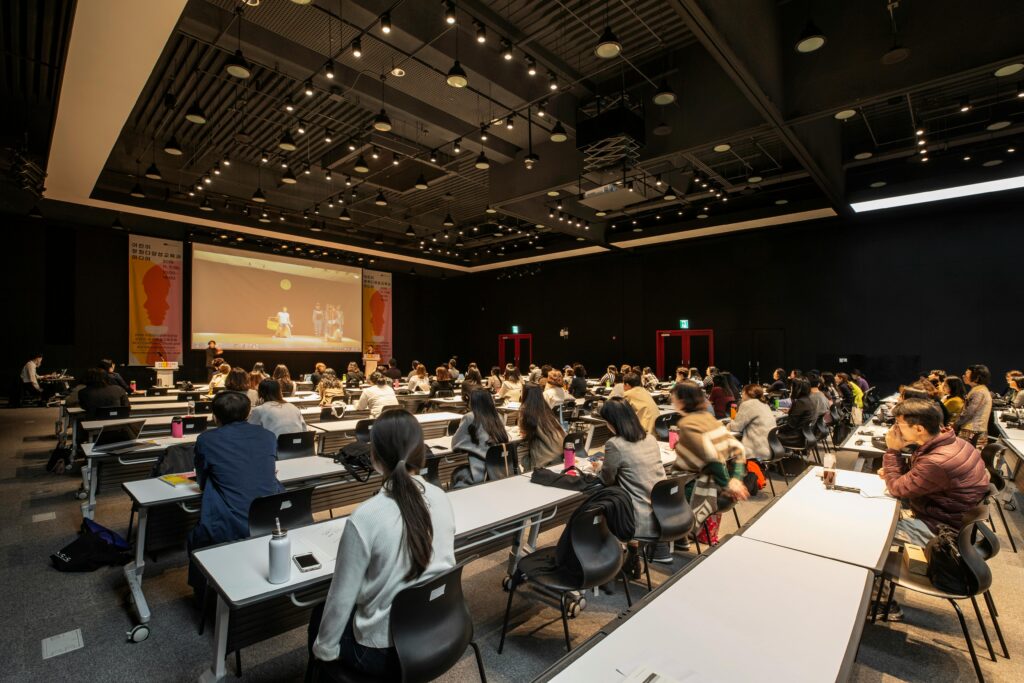
ith your objectives set and programme taking shape, logistics become the primary focus. This is where planning discipline is most critical — and where gaps in coordination tend to surface.
Venue Selection
Choosing the right venue for your conference in Singapore goes beyond capacity and location. Evaluate venues against your programme requirements. A multi-track conference needs breakout spaces with good acoustic separation. A leadership summit may call for a more intimate setting than a conventional ballroom. Consider natural light, catering quality, AV infrastructure, and the experience your venue partner brings to event operations.
Accessibility matters, too. Proximity to MRT stations, availability of parking, and step-free access should all factor into your decision, particularly for large or diverse audiences. A knowledgeable event planner in Singapore will have knowledge of established venues and can help you negotiate terms, assess suitability, and avoid common pitfalls in the selection process.
Vendor Coordination
Corporate event management involves coordinating multiple vendors working in parallel: AV production, catering, photography, event registration, logistics, and sometimes live streaming or translation services. The key to managing this effectively is assigning clear accountability and establishing communication protocols early.
Appoint a single point of contact for each vendor relationship. Define deliverables, timelines, and escalation paths in writing. Do not assume that vendors will coordinate amongst themselves — that is your team’s responsibility. Regular check-ins in the weeks leading up to the event help surface issues before they become problems on the day.
When evaluating an event management company in Singapore, look beyond price. Experience with similar conference formats, depth of vendor networks, and the quality of their communication throughout the planning process are all stronger indicators of delivery capability.
Event Registration
Event registration is often underestimated in importance. A well-designed event registration process does more than collect names. It manages capacity, segments your audience, enables personalised communication, and generates useful data. Whether you use a dedicated registration platform like Eventive’s or work with corporate event organisers, ensure the system is tested thoroughly before invitations go out.
Execute, Monitor, and Evaluate
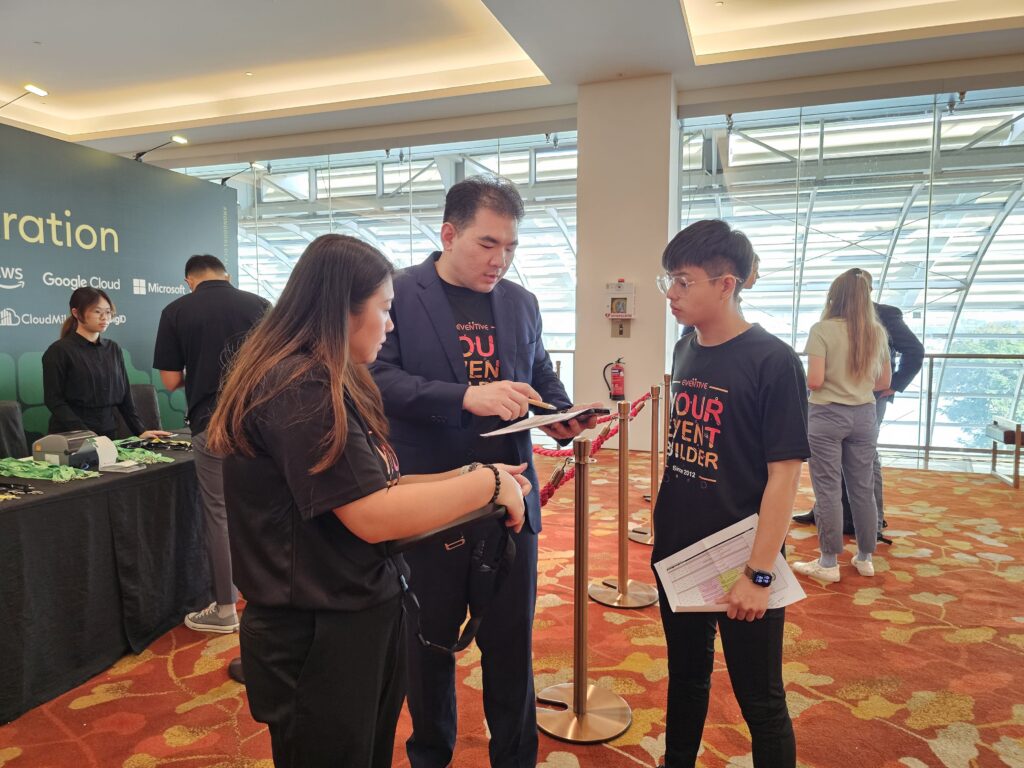
The planning phase ends when the event begins — but the work of the organiser is far from over. Event day execution for a corporate conference demands sharp on-ground coordination, a composed team, and the ability to make fast decisions under pressure.
Pre-Event Setup
Arrive at the venue well ahead of attendee arrival. Conduct a full walkthrough against your run sheet, verifying that all technical, signage, registration, and catering elements are in place. Run a live technical rehearsal with your AV team and speakers. This is the last opportunity to identify and resolve issues before the room fills.
Brief every team member on their specific responsibilities, escalation paths, and contingency plans. When your team understands the broader picture, they work with more confidence and make better decisions independently. For larger conferences, this coordination is often led by a dedicated event organiser in Singapore who manages all on-ground stakeholders from a central command position.
Real-Time Monitoring
Once the conference is underway, your role shifts to monitoring and facilitating. Keep a close eye on programme timing, since sessions that overrun compress everything downstream and create unnecessary pressure. Maintain open communication lines with your team throughout the day, and ensure that any issues are escalated and resolved quickly and discreetly.
Attendee experience should be actively managed, not assumed. Observe how people move through the venue, whether signage is effective, and whether any friction points emerge at registration or between sessions.
Post-Event Evaluation
Evaluation is not an afterthought — it is an integral part of the conference planning process. Collect post-event feedback promptly, while the experience is still fresh. Supplement this with internal team debriefs and a review of your predefined success metrics.
Document what worked, what didn’t, and what you would do differently. These insights are invaluable for future conferences and help refine your approach over time. A thorough post-event report also provides stakeholders with the evidence they need to assess event ROI and make informed decisions about future investments.
Conclusion
Planning a successful corporate conference in Singapore requires more than a checklist — it demands strategic thinking, meticulous coordination, and experienced on-ground execution. From the clarity of your initial brief to the quality of your post-event evaluation, every stage of the process contributes to the overall outcome.
The organisations that consistently deliver standout conferences are those that treat planning as a discipline, not a task. They invest in the right partners, build robust processes, and approach each event as an opportunity to strengthen relationships, communicate value, and advance their business objectives. Whether you manage the process in-house or engage one of Singapore’s leading event management companies, the commitment to structured, strategic planning is what separates a good conference from a great one.
If you are planning a corporate conference in Singapore and want a team that can take your brief from strategy through to seamless delivery, contact Eventive today. Our experienced team brings our expertise in end-to-end event management in Singapore to every conference we produce, so you can focus on your attendees while we take care of the rest.
Frequently Asked Questions (FAQ)
1. How far in advance should I start planning a corporate conference in Singapore?
For mid-sized conferences of 100–300 attendees, a planning lead time of four to six months is advisable. Larger-scale or multi-track conferences may require six to twelve months, particularly if securing a sought-after venue or high-profile speakers. Starting early gives you greater flexibility across all planning areas, including budget management and vendor selection.
2. What are the key elements of a corporate conference brief?
A strong conference brief should include your event objectives, target audience profile, estimated headcount, budget parameters, key dates, stakeholder expectations, and any brand or communication guidelines. The brief serves as the reference document for all planning decisions, so the more specific it is, the more aligned your planning team will be from the outset.
3. How do I choose the right conference venue in Singapore?
Beyond capacity and location, evaluate venues based on your programme requirements, AV infrastructure, breakout space availability, catering quality, and accessibility via public transport. Singapore offers a wide range of conference-ready venues — from hotel ballrooms and convention centres to purpose-built event spaces. Working with an experienced event management company in Singapore can help you shortlist and negotiate with venues efficiently.
4. How do I manage multiple vendors for a large corporate conference?
Appoint a single point of contact for each vendor, define deliverables and timelines clearly, and establish regular communication check-ins in the weeks leading up to the event. A central event run sheet shared across all vendors helps ensure everyone is working to the same timeline and escalation structure.
5. What metrics should I use to evaluate conference success?
Beyond attendance numbers, consider engagement quality, session feedback scores, lead generation activity, content reach (for hybrid or recorded sessions), and stakeholder satisfaction. Defining these metrics before the event — rather than after — ensures your evaluation is meaningful and aligned with your original conference objectives.
Share it out: