

How to Plan a Networking Event in Singapore That Builds Real Connections

Jump To Section
Key Insights:
- The format of a networking event should be determined by the type of connections you want attendees to make, not by what is easiest to organise.
- Attendance quality matters more than attendance volume. Who is in the room determines the value every individual gets from being there.
- The right mix of activities, games, and facilitated interaction removes the awkwardness and gives people a natural reason to connect.
- Post-event follow-up is where the value of a networking event is either realised or lost — it deserves as much planning as the event itself.
- A well-designed networking event in Singapore creates the conditions for genuine business relationships, not just business card exchanges.
A networking event that actually works is rarer than most people think. The format exists everywhere: cocktail receptions, industry mixers, association dinners, post-conference socials, and so on, but the outcome is far from guaranteed. People arrive, cluster with colleagues they already know, exchange a handful of cards, and leave without a single meaningful new connection.
The difference between a networking event that generates genuine business relationships and one that people forget by the following Monday usually comes down to how deliberately it was designed. Not just the venue or the programme, but the underlying thinking about who should be in the room, what they need to feel comfortable enough to connect, and what happens after the event ends.
This guide walks through the four key areas that determine whether a networking event in Singapore delivers on its promise.
Define the Purpose and Design the Right Format

The most common mistake in networking event planning is choosing the format before defining the purpose. A cocktail reception, a seated roundtable, a workshop-style session, and a speed networking format all create fundamentally different social dynamics. What works well for one objective will actively work against another.
Start by asking what kind of connections you want your attendees to make. If the goal is broad relationship-building across an industry, a relaxed cocktail format with open space and minimal structure tends to work well. People can move freely, conversations happen organically, and the absence of a formal programme keeps the atmosphere light. If the goal is more targeted, like connecting senior decision-makers, facilitating introductions between specific groups, or generating leads for a particular business, a more structured format with facilitated introductions or curated venues gives the organiser more control over who meets whom.
Scale matters too. A networking event for 40 people behaves very differently from one for 200. Smaller events allow for more intentional curation and a tighter community feel. Larger events offer broader reach but require more deliberate design to prevent attendees from retreating into familiar groups and never venturing beyond them.
Getting this decision right early shapes everything that follows, including venue selection, catering style, programme flow, and the kind of activities that support rather than interrupt the networking itself.
Curate the Right Venue and Room
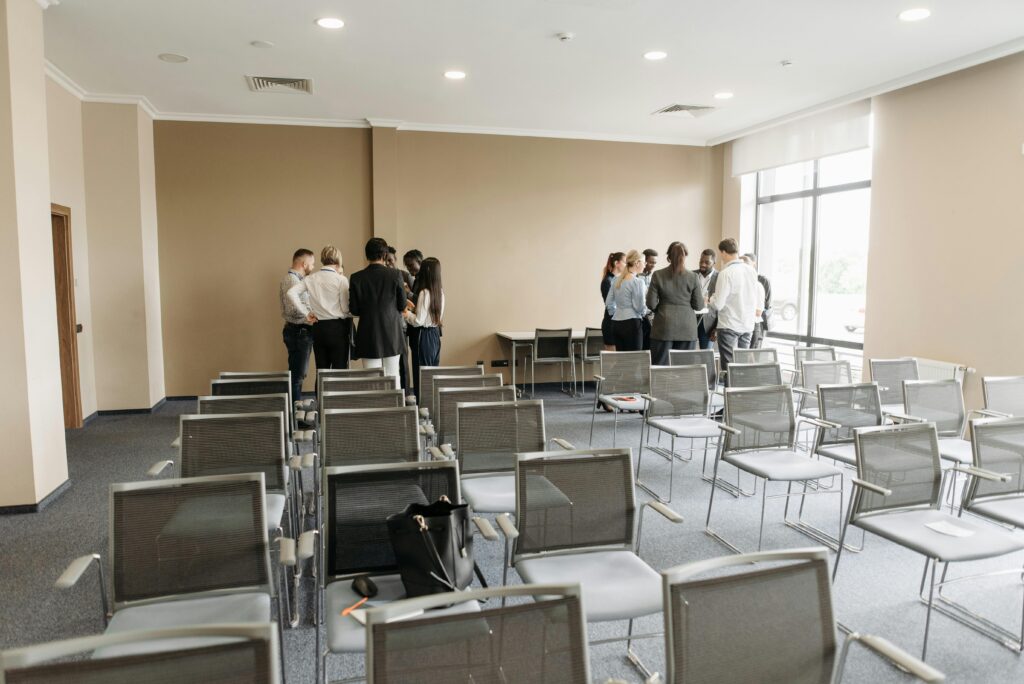
Choosing the right venue does more work at a networking event than at almost any other corporate event format. It sets the social temperature of the room before a single conversation has started, and a poor venue choice can undermine even the best programme design.
For networking events in Singapore, the primary criteria should be flow and atmosphere rather than capacity and prestige. A space that encourages movement, creates natural gathering points, and feels warm and approachable will produce better networking outcomes than a large, formal ballroom where people feel exposed when standing alone.
Think about how the room will be set up, where the food and drinks are positioned, whether there are standing tables that facilitate conversation without the commitment of being seated, and whether the layout creates natural traffic patterns that bring different groups of people into proximity. These are not aesthetic decisions. They are functional ones that directly influence whether your attendees end up talking to people they would not otherwise have met.
Accessibility and catering for diverse audiences matters too. A venue that is easy to reach by public transport, has clear signage, and feels welcoming from the moment attendees arrive, removes friction before the event has even begun. Attendees who arrive stressed or confused are less likely to be in the headspace to connect meaningfully.
Foster the Conditions for Genuine Interaction

Even well-intentioned professionals find unstructured networking uncomfortable. Walking up to a stranger and introducing yourself takes more social confidence than most people have in abundance, particularly at the start of an event when the room is still finding its energy.
The best networking events take this seriously and design around it. Some activities can include:
- Interactive games like Wheel of Fortune create immediate shared experiences that give people a reason to engage beyond professional small talk.
- Performances and entertainment, when timed well, provide natural conversation starters and lift the atmosphere at moments when energy might otherwise dip.
- Facilitated introductions where a host or emcee actively connects specific individuals or groups can help remove the awkwardness of the cold approach entirely.
Catering plays a more strategic role than it is usually given credit for. Food and drinks stations that are thoughtfully positioned encourage people to pause, mill around, and fall into conversation. Inclusive catering that accommodates diverse dietary requirements, including halal and other specific needs, signals that every attendee has been thought about. This matters for how welcome people feel in the room.
Eventive’s networking events in Singapore and across the region are built around exactly this thinking: creating friendly, relaxed environments where attendees have genuine reasons to connect, exchange knowledge, and build relationships that extend beyond the event itself.
Follow Up to Maximise the Value of Every Connection Made

The true value of a networking event is not fully realised on the night itself. It is realised in the days and weeks afterwards, when the connections made in the room are either developed into real relationships or quietly forgotten.
Post-event follow-up is consistently given less attention relative to the effort put into the event itself, and the results reflect that. A structured follow-up process, whether through a post-event email, a curated attendee directory, or a platform where participants can connect after the event, can extend the life of the networking beyond the physical gathering and give people a practical next step.
For event organisers, this phase also provides valuable intelligence. Collecting post-event feedback through surveys, monitoring engagement in any follow-up communications, and reviewing attendance data against registration numbers all feed into a clearer picture of what worked and what to improve for next time.
The event registration data gathered during check-in, including which attendees actually showed up and how the room composition mapped to the intended audience, is a useful starting point for evaluating whether the curation worked. If a significant portion of your target audience attended but left without engaging with the right people, that is a programme design problem to solve before the next event.
Following up also sends a signal to attendees about the organiser’s professionalism. A well-considered post-event communication, delivered promptly, reinforces the quality of the event experience and keeps the organiser at the front of mind for future events.
Conclusion
Networking events in Singapore work best when they are designed with intention at every stage, from the format and venue through to the activities on the night and the follow-up after. The goal is not to fill a room. It is to create the conditions where the right people feel comfortable enough to have conversations that lead somewhere.
That requires thinking beyond logistics and into the social dynamics of the event: who should be there, what will give them a reason to engage, and how the experience will be sustained after the doors close. When all of those elements work together, a networking event stops being a box-ticking exercise and becomes something attendees actively look forward to attending again.
Here at Eventive, we design networking events that go beyond small talk, creating friendly, well-managed environments where genuine business connections happen. From concept and curation to on-ground execution and post-event follow-up, our team handles every detail.
Ready to plan a networking event that people actually remember? Get in touch with Eventive today.
Frequently Asked Questions (FAQ)
What makes a networking event in Singapore successful?
A successful networking event is one where attendees leave with connections they would not have made otherwise. That comes down to thoughtful curation of the guest list, a format that removes the awkwardness of cold introductions, and a follow-up process that gives those connections somewhere to go after the event.
What format works best for corporate networking events?
It depends on your objective. Cocktail-style receptions with open space work well for broad industry networking. Roundtables and facilitated sessions suit more targeted introductions between specific groups. The format should always follow the purpose, not the other way around.
How do you encourage attendees to network beyond their existing contacts?
Structured activities, facilitated introductions, and thoughtful venue layout all help. Positioning food and drinks stations strategically, using games or interactive elements to create shared experiences, and having an emcee or host actively make introductions all reduce the social friction that keeps people talking to people they already know.
How many people should a networking event have?
There is no fixed number, but 40 to 150 attendees tends to be the range where networking events work best. Below that, the room can feel too small and the social pressure too intense. Above that, attendees can feel lost and default to familiar groups. Scale your format to your audience size rather than the other way around.
How important is post-event follow-up for networking events?
Very. The connections made on the night have a short shelf life without follow-up. A post-event email, a curated attendee list, or a platform where participants can reconnect gives those conversations somewhere to go. Organisers who invest in follow-up consistently see stronger long-term outcomes from their networking events than those who treat the event itself as the finish line.
How does working with an event management company in Singapore improve networking events?
An experienced event management company brings operational knowledge that directly affects the networking experience — from venue selection and layout to activity design, catering coordination, and post-event reporting. The logistical confidence that comes from a professional team allows the organiser to focus on their guests rather than the running of the event.
Share it out: