

A Guide to Planning Corporate Dinner and Dances in Singapore
Jump To Section
Key Insights:
- A well-defined theme and concept set the tone for every other decision you make, from decor to entertainment to the run of show.
- The best dinner and dances strike a careful balance between business objectives and guest enjoyment, and neither should come at the expense of the other.
- Venue selection and production quality are the structural backbone of any successful gala; both deserve more scrutiny than most planners give them.
- Catering and dietary management are not afterthoughts. They shape how guests feel about the entire evening.
- Working with an experienced event organiser in Singapore means having a partner who can hold all four of these elements together seamlessly.
Dinner and dances occupy a distinct place in the corporate events calendar. They are at once a celebration, a networking opportunity, a brand statement, and, when done well, a moment that lingers in attendees’ memories long after the plates have been cleared. Planning one, however, is considerably more complex than booking a ballroom and arranging a menu. The decisions you make across theme, entertainment, production, and catering are all important.
Singapore’s corporate events landscape has raised the bar considerably in recent years. Guests arrive with higher expectations around production quality, dining experience, and programme flow. For organisers, that means every element of the gala needs to be considered with both the guest experience and the business objective in mind. A dinner and dance that looks impressive but runs poorly will be remembered for the wrong reasons.
This guide walks through the four areas that most determine whether a corporate dinner and dance succeeds: building a cohesive concept, programming an evening that balances substance with enjoyment, nailing the production and venue fundamentals, and managing the catering experience with the care it deserves.
Set the Theme, Tone, and Concept
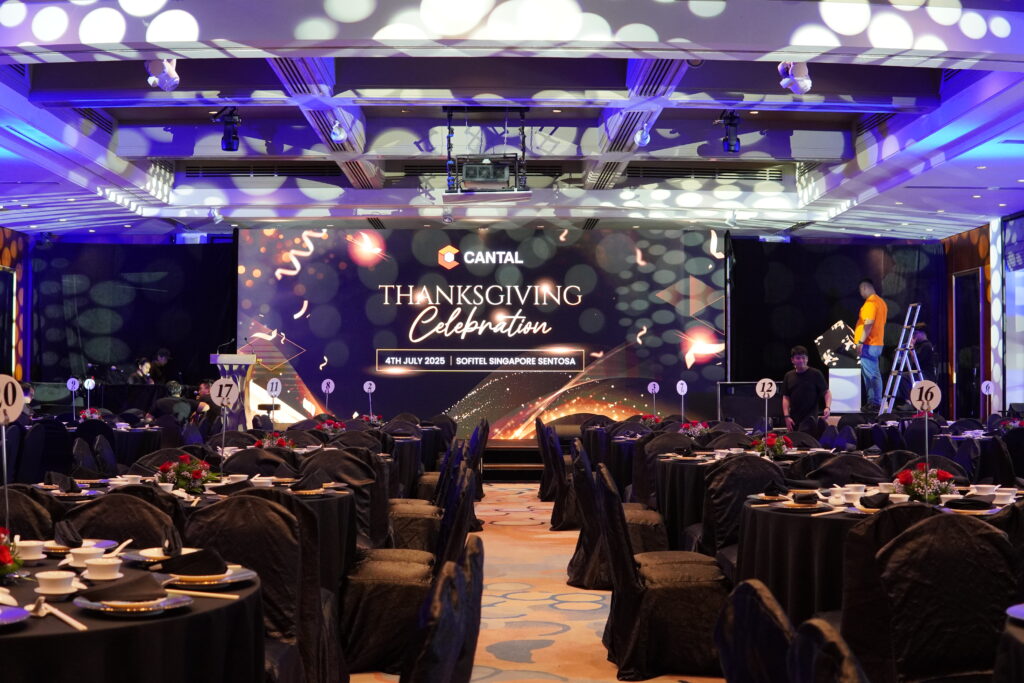
Every element of a dinner and dance, including the decor, the lighting, the entertainment, the emcee’s script, and the gifting, flows from the central concept. When the concept is vague or underdeveloped, those elements start to contradict each other. When it is clear and well-considered, everything in the room reinforces a single, coherent impression.
The starting point is understanding what the event needs to achieve. An annual appreciation dinner for long-serving staff calls for a different register than a client-facing product launch evening or a regional leadership conference close. The theme should answer that business intent before it addresses aesthetics. A “Roaring Twenties” concept might be visually arresting, but if it creates a disconnect from the company’s brand positioning, it works against the event rather than for it.
Once the purpose is anchored, the theme can be built outward into a colour palette, a spatial layout, an entertainment format, and a visual identity that runs consistently across all touchpoints, from the invitation to the backdrop to the dessert presentation. Corporate dinner and dances in Singapore increasingly lean into immersive, experiential concepts where guests feel they have entered a distinct world rather than simply attended a dinner. That ambition is worth pursuing, but it requires a production team with the capacity to execute it with discipline.
The tone is equally important. Formal does not have to mean stiff, and celebratory does not have to mean chaotic. Defining the desired emotional arc of the evening, from arrival energy through the main programme to the close, gives your production team, emcee, and entertainment acts a shared frame of reference.
Balance Business Objectives and Entertainment
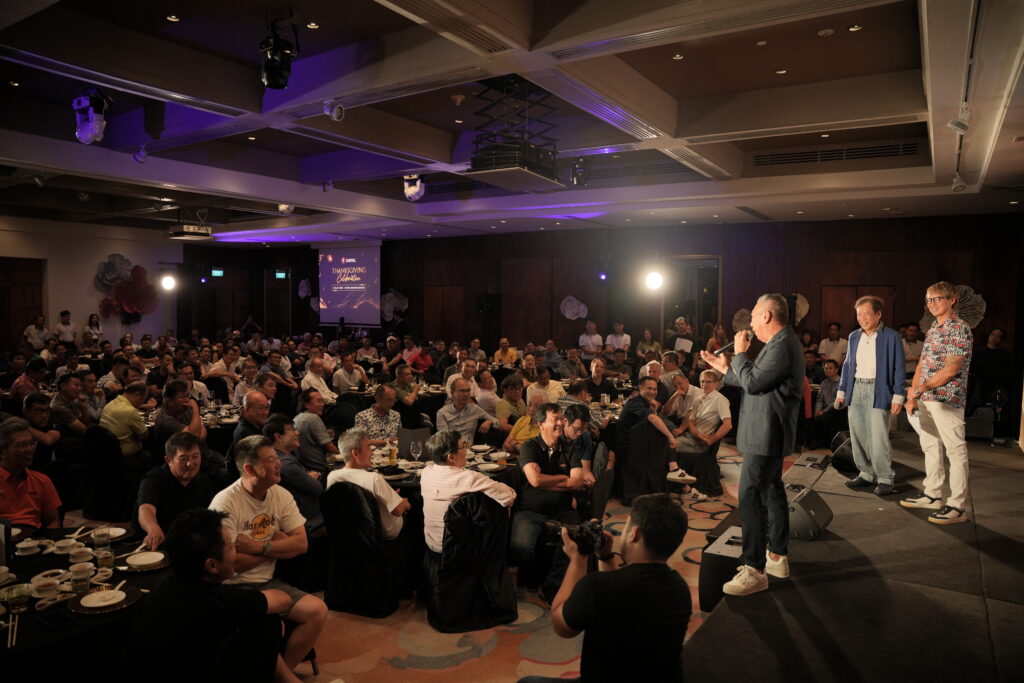
One of the most common mistakes in planning a corporate dinner and dance is treating the business portion and the entertainment portion as separate, competing halves of the evening. In practice, they need to be calibrated against each other across the entire run of show, not divided into segments and left to coexist.
The programme structure matters more than most planners realise. Awards ceremonies that run long, speeches delivered before guests have had a chance to eat, or entertainment acts dropped into the middle of a formal dinner service can each, independently, undermine the atmosphere an organiser has spent months building. The flow of the evening: when guests arrive, when they are seated, when key business moments land, when entertainment peaks, all of this should be mapped and stress-tested before the event.
Corporate dinner and dances in Singapore typically carry a mix of objectives: recognising performance, entertaining clients or partners, reinforcing culture, or marking a milestone. The best programmes build toward those objectives without making guests feel they are attending a company meeting in black tie. This usually means keeping formal business segments tight and purposeful, positioning them at natural focal points in the evening, and ensuring the entertainment programme earns its time rather than merely filling it.
Entertainment choices should reflect both the audience and the concept. A high-energy live band creates one kind of atmosphere; a curated cultural performance creates another. Neither is inherently right. What matters is coherence with the theme and relevance to the audience.
Experienced corporate event organisers will help you test your instincts against what actually works for corporate crowds in Singapore and push back where the programme needs restructuring.
Get the Production and Venue Details Right

Venue selection shapes almost every other decision in the planning process. Capacity, ceiling height, in-house AV capabilities, layout options, and noise restrictions all determine what is actually possible on the night. Choosing a venue for its looks alone, without checking whether it can support the event you have in mind, tends to create expensive problems later.
Singapore’s corporate events industry covers a wide range of venue types, from hotel ballrooms with established event infrastructure to independent spaces that offer more creative freedom but require more production input. Hotel ballrooms with strong in-house support often suit tighter timelines or larger headcounts. A standalone space can deliver a more distinctive experience when the concept calls for it and the budget allows. The right choice comes down to an honest assessment of both, made early in the planning process.
Event production quality — lighting, sound, staging, and AV — is where the difference between a competent event and a genuinely memorable one becomes most apparent. Poor sound undermines every speech and performance. Flat lighting makes even a well-dressed venue feel underwhelming. A stage that is too small or poorly positioned means a large portion of the room has a bad view. These are not areas to cut costs in at the end of the budgeting process.
A proper technical rehearsal is equally important. AV checks, run-of-show walkthroughs, and stage blocking for speakers and performers are what prevent avoidable problems on the night. The more complex the programme, the more a disciplined rehearsal determines whether the evening holds together.
Guest flow is worth the same attention. Registration queues that back up at arrival, unclear signage, or poorly positioned bars create friction before the programme has even started. Mapping the guest journey from arrival through to departure — including accessibility needs and contingencies for late arrivals — is part of production planning, not a finishing detail.
Manage Catering, Dietary Needs, and the Guest Experience
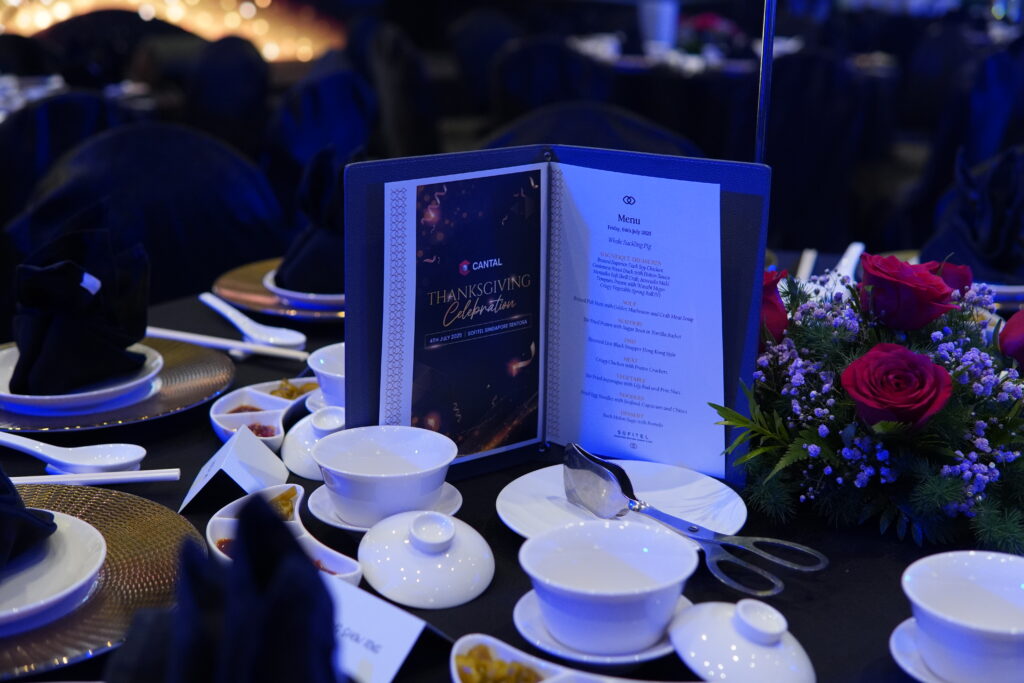
Food and beverage is the one element of a dinner and dance where every single guest will have a direct, personal experience. However, it is routinely under-specified in event briefs. The menu affects the pace of the evening, the energy of the room, and how guests feel about the event long after the programme has ended. Getting it right requires more planning than most organisers allocate to it.
Menu selection for a corporate gala in Singapore needs to account for the breadth of dietary requirements typical of a diverse professional guest list. Halal certification, vegetarian and vegan options, nut and shellfish allergies, and religious dietary restrictions are all standard considerations, not edge cases. The most reliable approach is to collect dietary information at registration and share it with your caterer in structured form, rather than managing individual requests on the night.
Service style and pacing are equally significant. A plated dinner service creates formality and allows the programme to be timed against courses; a buffet or station format encourages circulation but can undermine programme structure. The right choice depends on the event’s objectives, the venue layout, and the overall concept. Hybrid approaches, such as a seated dinner with dessert stations, for instance, can work well when they are planned deliberately rather than adopted by default.
Beyond the food itself, the guest experience across the full evening is worth mapping in detail. Arrival experience, table settings, welcome drinks, gifting, and the quality of host interaction all contribute to how guests feel about the event. Dinner and dances are, at their core, hospitality events. The operational discipline that supports a great corporate programme is the same discipline that makes guests feel genuinely well looked after, and that impression is ultimately what determines whether the event achieves what it set out to do.
If you are planning for a mixed audience, our guide on inclusive event planning for diverse audiences covers the broader considerations worth keeping in mind.
Eventive’s event management team brings that end-to-end perspective to every gala we produce, from the event planning phase through to post-event reporting.
Conclusion
Dinner and dances reward the organisers who treat them as integrated experiences rather than a collection of individual components. When the concept, programme, production, and catering are built to work together, the result is an evening that serves its business purpose while genuinely impressing the people in the room. When any one of those elements is underdeveloped, the gaps tend to show.
For organisations planning dinner and dances in Singapore, the difference between a good event and a great one often comes down to the quality of the team managing it. From initial concept to final rundown, having a partner who understands both the strategic objectives and the operational details is what makes consistent delivery possible.
Here at Eventive, we manage corporate dinner and dances from end to end. Explore how we have managed corporate dinner and dances and awards nights across Singapore, or contact us to plan your next dinner and dance and dance event today!
Frequently Asked Questions (FAQ)
- What is a reasonable budget range for a corporate dinner and dance in Singapore?
Budget varies significantly based on guest count, venue choice, production scale, and menu selection. A mid-range corporate gala in Singapore typically runs from S$150 to S$300 per head when production, catering, and entertainment are factored in together. Larger events with full production builds will sit above that range.
2. How far in advance should we start planning a corporate dinner and dance?
For events with 200 or more guests, six to nine months is a reasonable lead time in Singapore. Venue availability, especially for preferred hotel ballrooms and dedicated event spaces, tightens considerably for year-end dates from as early as mid-year.
3. How do we handle dietary requirements for a large guest list?
Collect dietary information at registration using a structured form and pass the compiled data to your caterer well in advance of the event. For Halal requirements specifically, confirm the caterer’s certification status early, as this affects venue and supplier selection.
4. What makes dinner and dances different from other corporate dinner formats?
Dinner and dances are typically more formal in production, programme, and dress code than other corporate dinner formats. They usually incorporate a structured awards or recognition component, higher production investment in lighting and staging, and a longer programme arc designed to build toward a meaningful close.
5. How do we choose between a hotel ballroom and an alternative venue?
Hotel ballrooms offer built-in catering infrastructure, predictable service, and strong logistical support, making them lower-risk for first-time organisers. Alternative venues offer greater creative freedom but require a fuller external production build. The right choice depends on your concept ambitions, budget, and how much creative control matters to the event.
6. Should we hire an external event organiser for a corporate dinner and dance?
For events above 100 guests or with significant production requirements, working with an experienced event organiser in Singapore like Eventive is strongly advisable. The coordination across venue, production, catering, entertainment, and run-of-show management is substantial, and experienced teams will anticipate and resolve issues that in-house teams typically encounter for the first time.
Share it out: