

How to Make Your Corporate Event More Sustainable in Singapore

Jump To Section
- Customisable RSVP Forms: Capturing the Right Attendee Data from the Start
- Automated QR Code Generation: Reducing Friction Between Registration and Arrival
- On-Site QR Scanning, Check-In and Name Tag Printing: Eliminating Queues on Event Day
- Real-Time Dashboard and Attendee Tracking: Full Visibility Before, During, and After
Key Insights:
- Sustainability is now a planning decision, not an add-on; the choices that lower your event’s footprint usually improve the experience too.
- The biggest gains come early, from the venue, catering and materials you choose, so build them into the brief rather than bolting them on later.
- Measuring and reporting your impact turns good intentions into credentials that sponsors, leadership and attendees increasingly expect.
Sustainability has moved up the agenda for corporate events in Singapore. Attendees notice it, leadership teams ask about it, and sponsors increasingly expect it. With the national push behind the Singapore Green Plan 2030, a corporate event that ignores its footprint now looks out of step.
The good news is that a greener event is rarely a worse one. Many of the choices that reduce waste and emissions also lift the guest experience, from better venues to smarter catering and cleaner, more digital touchpoints.
This guide sets out a practical approach to corporate event management with sustainability built in, covering the brief, your venue and suppliers, waste reduction, and how to measure and communicate the result.
Start with Sustainability in the Brief

Sustainability works best when it is a goal from the outset, not a retrofit. If you decide late that you want a greener event, your options narrow to small gestures. Build it into the brief alongside your objectives and budget, and it shapes the bigger decisions where the real impact sits.
Be specific about what you want to achieve. That might mean a paperless event, a plant-forward menu, a certified venue, or a target to divert most of your waste from landfill. Clear intentions give your team and suppliers something concrete to deliver against, rather than a vague wish to be more eco-friendly.
Thoughtful corporate event planning also weighs the trade-offs honestly. Some sustainable choices cost more, others cost less, and a few simply require planning ahead. Naming your priorities early lets you spend where it matters and avoid the token gestures that achieve little.
It helps to assign ownership too. When one person on the team holds the sustainability goals, they stay visible through the inevitable compromises of planning, rather than quietly slipping off the list as the event date approaches.
Choose Greener Venues and Suppliers

Your venue is the single biggest lever you have. Singapore has a strong selection of venues with green building credentials, efficient energy and water systems, and established recycling, and choosing one of them does much of the heavy lifting for you. It is far easier to run a sustainable event in a building designed for it than to compensate for one that is not.
Look beyond the building to how it operates. Ask about energy sources, waste handling, water efficiency and whether the venue tracks any of this for you. The answers tell you how seriously a venue takes sustainability and how much supporting data you will be able to report afterwards. Our guide on venue options in Singapore is a useful starting point for weighing these factors.
Suppliers matter just as much. Caterers, production partners and merchandise vendors all carry a footprint, so choose ones that can evidence responsible practices, whether that is local sourcing, reusable equipment or recyclable materials. A partner that cannot answer basic questions about its practices is a sign to look elsewhere.
Location is part of the equation as well. A central venue close to MRT lines reduces the travel footprint of your attendees and tends to lift turnout at the same time, since easy access removes a common reason people skip events.
Cut Waste in Catering, Materials and Production
Food is one of the largest sources of event waste, and also one of the easiest to manage. Pre-order or registration-linked catering reduces over-ordering, plant-forward menus carry a lower footprint, and arranging to donate surplus food keeps good meals out of the bin. Locally sourced ingredients cut transport emissions and often taste better too.
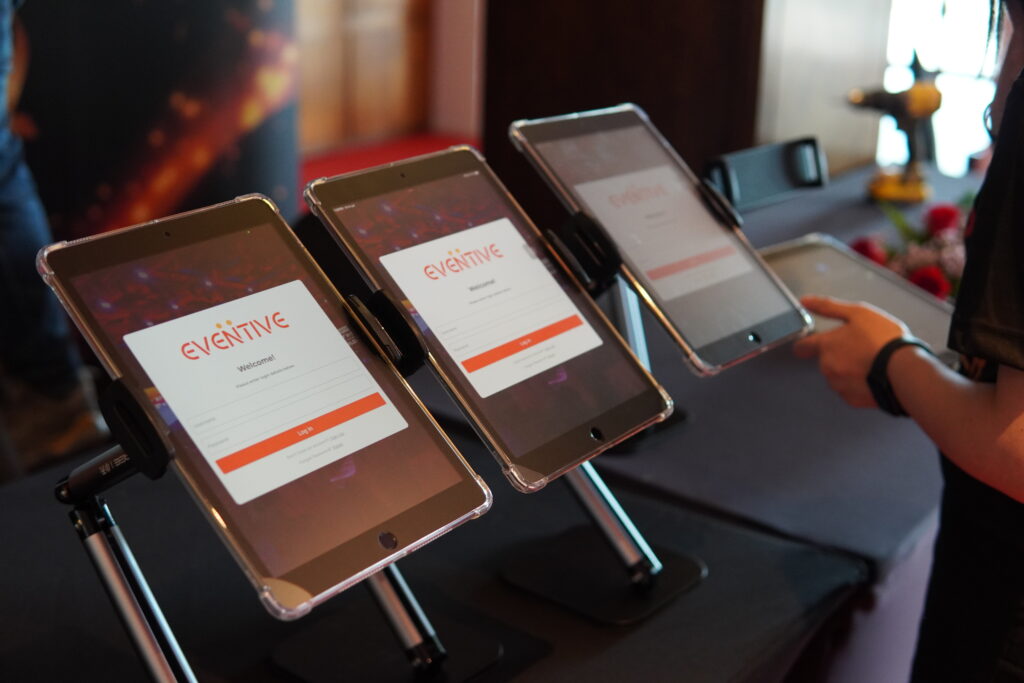
Printed materials are the next obvious target. A digital agenda, an event app, and on-screen signage remove most of the paper a traditional event generates, while usually improving the attendee experience. Where you do need physical items, choose reusable or recyclable options and avoid single-use giveaways that end up discarded.
Production deserves the same attention. Reusable staging and backdrops, efficient LED lighting, and equipment hired rather than bought all reduce impact. Experienced event production can deliver a polished, branded event that also stands up to scrutiny on its footprint, so you do not have to choose between impact and responsibility.
Build waste handling into the plan rather than leaving it to chance. Clearly labelled recycling points, a brief for staff on how waste is sorted, and a quick check with the venue on what it can actually process all make a measurable difference on the day.
Measure, Report and Communicate Your Impact

If you do not measure it, you cannot prove it. Decide before the event what you will track, whether that is waste diverted, paper saved, food donated, or emissions avoided through reduced travel. Even simple figures give you a credible story to tell afterwards, rather than a vague claim that the event was green.
Reporting closes the loop. A short post-event sustainability summary, shared with leadership and sponsors, turns your effort into evidence. This matters commercially, because corporate procurement teams and sponsors increasingly screen partners on exactly these criteria, and an event that can show its credentials is easier to fund and to justify.
Communicate it well during the event too. Making your sustainability measures visible to attendees, and weaving the story into your event marketing, ensures the work earns the recognition it deserves. Quiet good practice that nobody hears about is a missed opportunity.
There is an internal benefit as well. Employees increasingly want to work for organisations that act on their values, so a visibly responsible event supports your employer brand as much as your market reputation, and the same effort does double duty.
Conclusion
A more sustainable corporate event is well within reach in Singapore, and it rarely means a lesser experience. Build sustainability into the brief, choose the right venue and suppliers, cut waste where it counts, and measure the result, and you create an event that is better for the planet and stronger for your brand. Here at Eventive, we plan and deliver responsible corporate events of every kind across Singapore and the region, from seminars and conferences to product launches, tradeshows, roadshows, dinner and dances and networking events, all through one coordinated team. If you want an event management company in Singapore that can plan a credible, sustainable event from brief to delivery, contact Eventive today, and let’s work together on your next event!
Frequently Asked Questions (FAQ)
- Does running a sustainable event cost more?
Not necessarily. Some measures carry a premium, but many, such as going paperless, smarter portion planning and reusable staging, reduce cost. The key is to decide your priorities early and spend where it has the most impact. - What is the easiest way to make an event greener?
Start with the venue and the catering, since these carry the largest footprint. Choosing a green-certified venue and using pre-order, plant-forward menus with surplus food donation delivers a big improvement with relatively little effort. - How do I reduce waste at a corporate event?
Go digital for agendas and signage, avoid single-use giveaways, choose reusable or recyclable materials, and set up clearly labelled recycling points. Confirm with your venue what it can actually process so your efforts are not wasted. - How can I prove my event was sustainable?
Decide what to measure before the event, such as waste diverted, paper saved or food donated, then share a short post-event sustainability summary with leadership and sponsors. Working with venues that track this data makes it far easier. - Why does event sustainability matter to sponsors?
Sponsors and corporate procurement teams increasingly screen partners on environmental criteria. An event with clear sustainability credentials is easier to sponsor, easier to justify internally, and reflects well on everyone associated with it.
Share it out: